
Mondo 2000: A Brief Introduction
(Or, why I am no longer respectable company at normal people gatherings)
Welcome to the Unseen Internet! I’m Shira Chess, an academic who studies … let’s call it ‘weird internet shit.’ 👻 I used to study video games. My newest book, The Unseen Internet: Conjuring the Occult in Digital Discourse is available for Pre-order and comes out February 2026. I’m also in the process of co-authoring a book on the legendary cyberculture magazine Mondo 2000 with R.U. Sirius. Follow along as I trace the edges of the digital strange and uncanny from the past, present, and future.
Lately, I have had a difficult time making small talk at holiday parties, meetings, and other end-of-year gatherings.
Obviously, some of this has to do with garden variety awkwardness, although increasingly my inability to have normal conversations has to do with the fact that all I really want to talk about these days is gossip about a group of 1990s weirdos and freaks.
“What are you working on next?" people ask.
“I’m writing a book about a 1990s cyberculture magazine.”
At this point, their eyes usually glaze over and I can tell that they think whatever follows is going to be boring. Who the hell writes about magazines anymore, after all?
“Oh?” they ask politely, “What was it called?”
I then launch into a semi-unhinged deep description of Mondo 2000, a magazine that most of the people I meet at social gatherings have never heard of. Somewhere in the description I apologetically add, “I’m co-authoring the book with the former editor-in-chief. He goes by the nom de plume R.U. Sirius.”
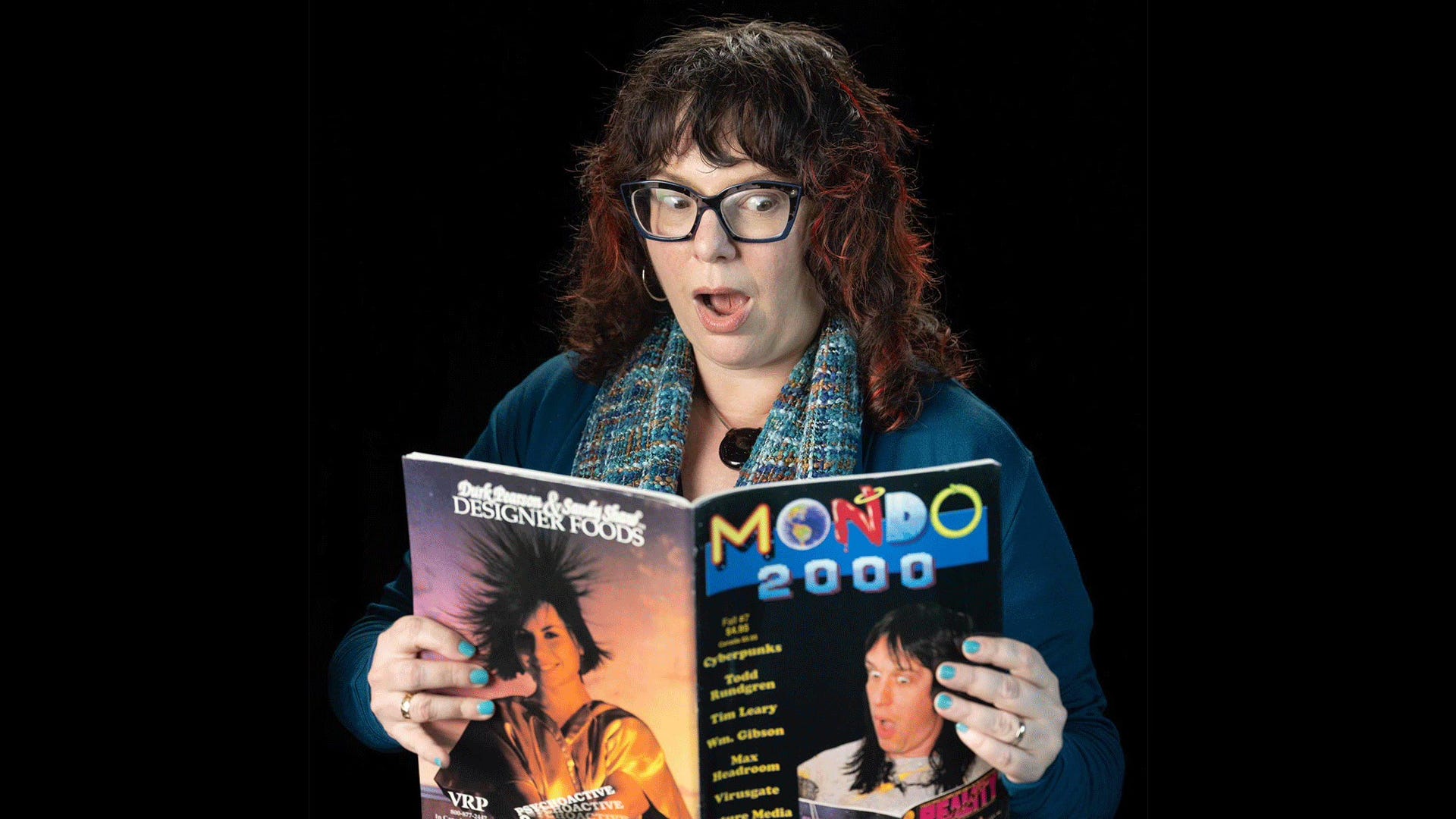
At this point most of them check out. I’ve gotten some scowls from associate deans, some polite nods, some chuckles, some eyebrow raises. Realizing that I am losing them, I try to find the language to express to them that, no I’m not crazy and this is actually interesting but it often falls flat.
“They, uh… they did a lot of drugs. And probably defined the edges of digital culture today. But they were just making it all up. They lived and worked out of a mini-mansion in Berkeley Hills. They were a scene. All of the early tech people partied with them.”
At this point I can feel them trying to leave the conversation, and I excitedly blurt out, “They kept a bear penis in the fridge! They kept it in a Ziploc full of preserving salts!” Occasionally I have to backtrack to explain, “No, I mean B-E-A-R not a B-A-R-E human penis.”
Eyes averted. Moving on. Surely, they wonder, there is a sane person I can talk to?
And so it goes. You can’t take me anywhere, anymore.
In early January I will take my third trip to San Francisco to work with R.U. Sirius (real name, Ken Goffman). And so, this seems as good of a moment as any to explain what Mondo 2000 was, a little of why it was important, and how the hell I got roped into this, subsequently losing my few remaining conversational abilities.
What was Mondo 2000?
Mondo 2000 was a magazine that ran from 1989 until 1997. It peaked around 1990 to 1993, causing a stir at the moment that people began to realize that digitality was coming for us all.
The magazineers were a Time magazine cover story and also profiled in Newsweek, New York Times, The Chicago Tribune, The Washington Post, and a pile of other once-important venues. Their writing was used in a prelude to Billy Idol’s flop album Cyberpunk. R.U. Sirius was on two episodes of Phil Donahue. I once heard that during a presser before Labor Day in 1992, reporters asked then candidate Bill Clinton what he was doing over the break. “I’ll be reading Mondo 2000!” he reportedly said. (Note: I’ve never found any evidence of this one, but I like the story and it’s plausible enough.)
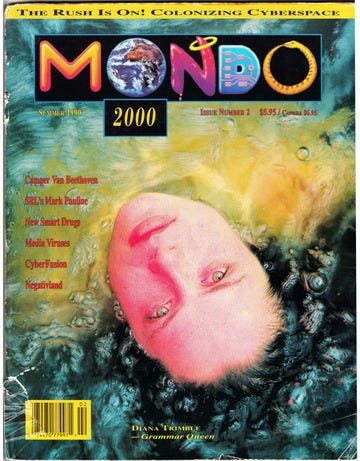
The list of 90s high tech influencers who partied with the Mondoids was exhaustive. As were the parties.
Mondo 2000 wasn’t the original version of the magazine that would be known by that name. The original iteration was called High Frontiers and was a magazine about the science and culture of hallucinogens. Terence McKenna (who is largely responsible for mushrooms and DMT’s popularity in this country) partially funded the first issue of HF and 20th century psychedelic mascot Timothy Leary was part of the scene.
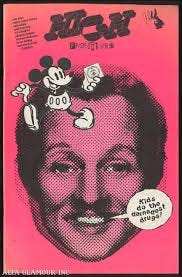
In 1988, they briefly changed their name to Reality Hackers after hanging out with a bunch of Bay Area hackers. Writer Allan Lundell declared, “We’re not hackers. We’re reality hackers.” The name stuck. For two issues, until their sales dropped in 1988 because no one knew what a hacker was. (It kept getting shelved under true crime as in, literally hacking people up.)
They shifted to their final name, Mondo 2000 in 1989. I’m not going to break down the full story here, but it is wild, absurd, brilliant, and cringeworthy all at once. They are almost definitely the reason that Wired magazine became what it did.
Why was Mondo important?
In one interview about the magazine, Douglas Rushkoff, who wrote about Mondo in his 90s book Cyberia, notes that today “Physical reality isn’t what it used to be. Now you create a Facebook group to do what Mondo did. Oddly enough, Mondo was the last scene of the last era,” and then adding, “The closest thing to a place now is the friggin’ Google campus or Apple campus. It’s these corporate campuses where somehow magic is supposed to happen in the form of technological innovation.”
Mondo was a scene at the end of physical scenes, the last big party of a shrinking millennium before everything changed. But a story of a scene is always necessarily a tragedy. At the center of a scene, the participants always think it will last forever, but of course it cannot.
I was not a fan of Mondo 2000 when it was in its prime. I vaguely knew of it. I might have read an issue. It wasn’t my thing.
But when I wandered into an archive of the magazine in 2023 while researching my book The Unseen Internet I was shook.
I had only barely remembered what authentic content even looked like. The magazine was wild, bizarre, and beholden to no one. They never had any big financiers—almost the whole operation was funded by the Publisher/Domineditrix Alison Bailey Kennedy (nom de plume: Queen Mu).
As a Gen-X-er, the content of Mondo 2000 looked both familiar and alien. Reading futurist predictions from 30 years ago is jarring. There were things that made me deeply uncomfortable. There were things that made me laugh. There were things that made me cheer. It was content that was produced as the cold war was ending, before Columbine, before 9/11, before anyone knew what the internet would become.
I was charmed.
What R.U. even doing?
I performed dozens of interviews with deeply unreliable narrators while working on this book. Often, an interviewee would suddenly declare, “You seem like the perfect person to be writing this!” Each time this has happened I would have to hold back the compulsion to not reply in a way that would have sounded insecure. (“Really? You think so? Can you tell me why I’m writing this book?”)
I’m not a trained historian and I wasn’t a fan of the magazine in the 90s. At every point in this project I’ve fumbled forward, sure that if I keep going I would better understand the “YOU ARE HERE” map presented before us all, now.
Writing this book has changed who I am and how I understand the world on a fundamental level.
Me (an anxious Gen-X tenured media professor) writing a book with R.U. Sirius (a verifiable counterculture Yippie known for his irreverent writing and prolific drug use) often feels like a premise for a Chuck Lorre sitcom. (I’d like to think we were the quality of a Michael Schur sitcom, but who am I fooling, really?)
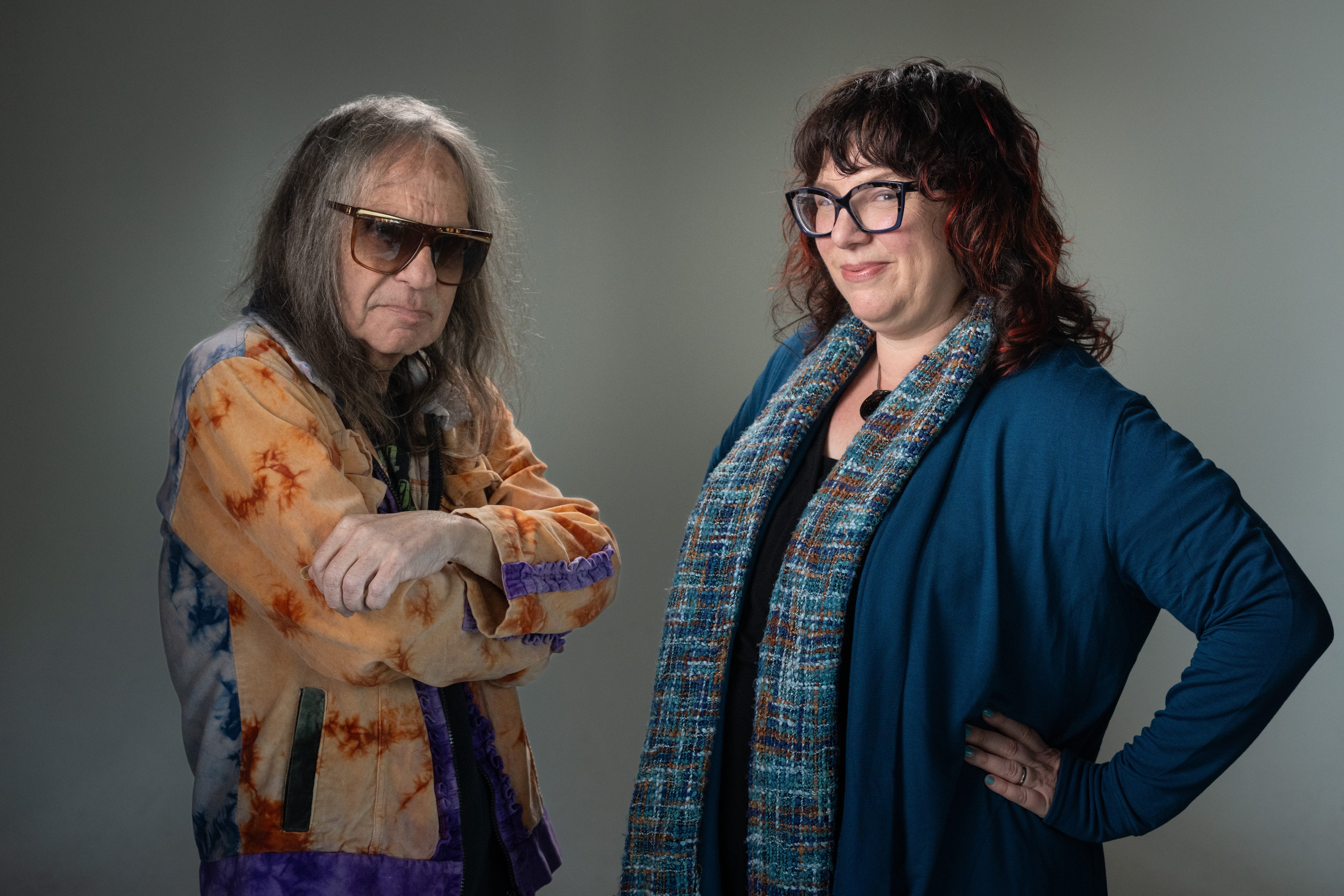
In the coming weeks I’m going to share some of my favorite carnivalesque and hallucinogenic rabbit holes from a mini-mansion in Berkeley Hills that—in part—got to define our current moment. I have photos, videos, documents, and all kinds of weirdness.
Stay tuned.
"Mondo was a scene at the end of physical scenes, the last big party of a shrinking millennium before everything changed. But a story of a scene is always necessarily a tragedy. At the center of a scene, the participants always think it will last forever, but of course it cannot."
Indeed. Back then, I was Gracie of Gracie & Zarkov (we funded HF#2 via hallucinogen purchases). Reviewing our files, I'm continually astounded at how eerily prescient yet not-so-prescient Mondo was.
Thanks for undertaking the task of sorting out history when all the narrators (& their productions) were deliberately unreliable & often too high to remember things.
Bart's photos are very echt, too. Looking forward to more.
-><-